A sharp blade is important, but consistent aluminium cutting also depends on profile stability, controlled blade movement and operator safety.
Compared with a standard aluminium drop saw, upcut technology addresses each of these factors by bringing the blade through the material from within a guarded cutting area. Secure clamping and controlled feed add greater stability to the process, helping professional fabricators achieve safer operation, cleaner finishes and less avoidable waste.
Safer, Easier Day-to-Day Operation
Improved Operator Safety
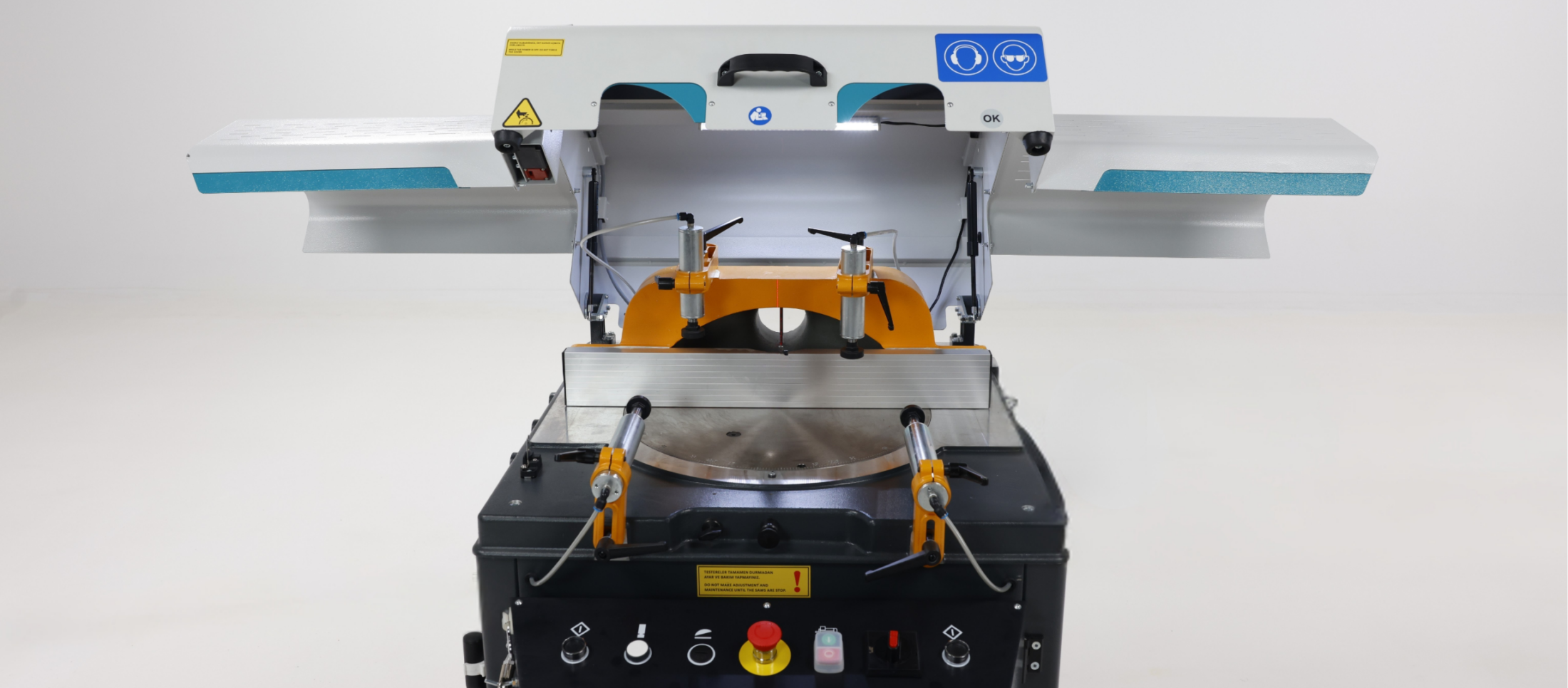
With an upcut saw, the blade rises from within a guarded cutting area rather than being lowered towards the profile from above. Pneumatic clamps secure the workpiece and smaller offcuts before cutting begins, reducing the risk of unexpected movement. Modern machines now also include protective hoods and two-hand controls to provide further separation between the operator and the cutting zone.
By comparison, older drop saws can leave the blade exposed and provide limited guarding or material support. This increases reliance on the operator to steady the profile manually, creating a less controlled and higher-risk cutting process.
Higher Productivity with Less Operator Fatigue
Repeatedly steadying profiles, managing offcuts and controlling each cut can become physically demanding over a full shift. Once the material is positioned, an upcut saw’s controlled cycle manages more of the process, allowing the operator to concentrate on loading, setup and checking the finished profile.
Less manual input helps maintain a steadier production rhythm throughout the day. Operators with different experience levels can also follow a more repeatable process, reducing variation across jobs.
Better Cutting Performance
Better Cut Quality and Finish
Cutting speed and pressure can vary between operators when using a manually controlled saw. Fatigue may create further variation after hours of repetitive cutting.
An upcut saw uses a controlled blade feed to move through the profile at a consistent rate throughout the production day. This reduces reliance on individual technique and supports smoother cuts, cleaner edges and more uniform finish quality.
More Accurate Mitres
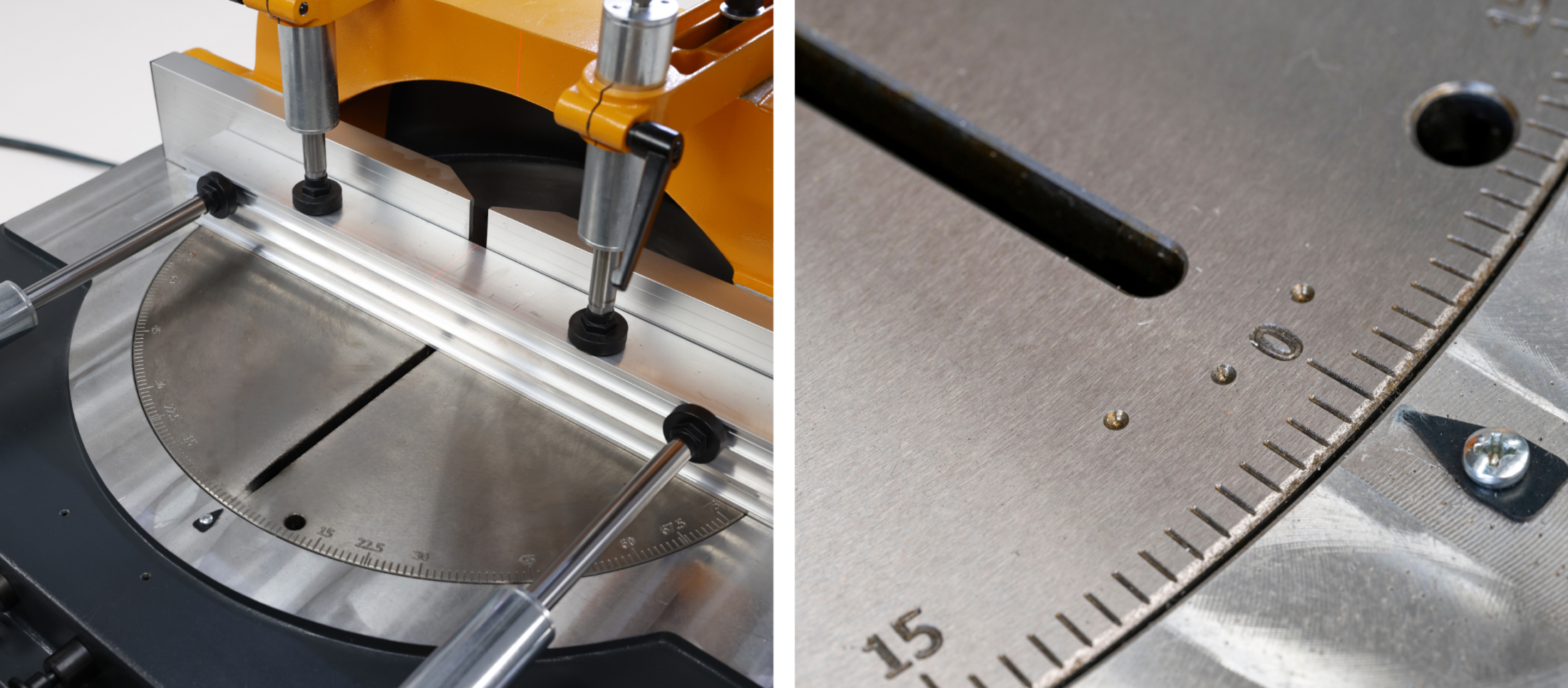
Reliable angle setup and correct profile positioning are both essential for accurate mitres. Many upcut saws include locating points for commonly used angles, allowing operators to move between straight and mitre cuts without measuring each position from the beginning.
Intermediate angles can also be selected and locked into place when required. Once set, the machine maintains the selected position across repeated components, helping improve set up and reduce adjustment during assembly.
Longer Blade Life
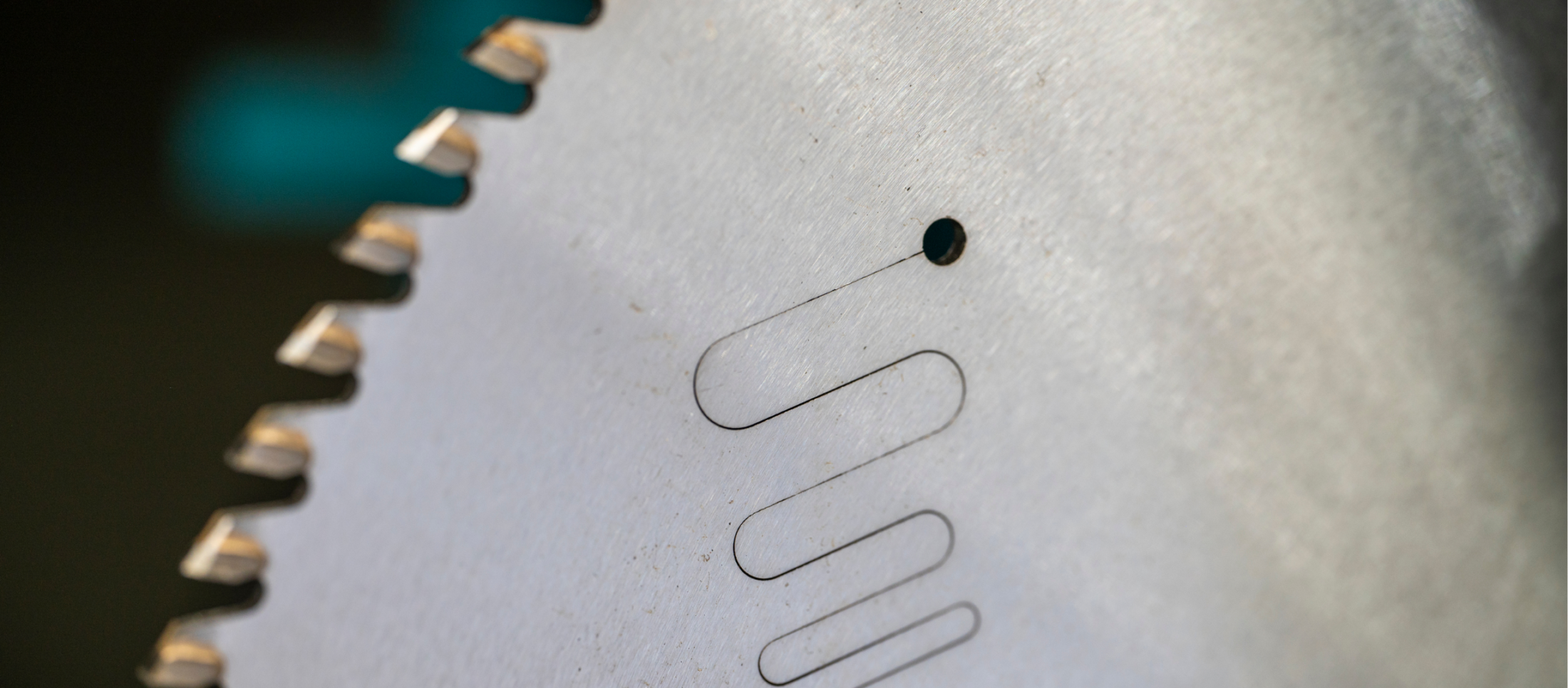
Excessive feed pressure and heat build-up can accelerate blade wear and affect cutting performance. Controlled blade movement reduces the likelihood of forcing the blade through the material too quickly.
Spray-mist lubrication can also help manage heat and friction at the cutting point. Blade selection, profile type, settings and maintenance will still influence service life, although a more controlled cutting process may reduce unnecessary wear and extend the period between sharpening or replacement.
Cleaner Workflow and Long-Term Value
Better Dust and Swarf Management
Aluminium chips and offcuts can quickly spread around an open cutting area. A guarded cutting zone keeps more swarf contained near the blade instead of allowing it to disperse across the surrounding workspace.
When paired with a suitable chip extraction system, an upcut saw can remove more swarf directly from the cutting area. Operators spend less time clearing chips, while reduced build-up helps maintain a cleaner and more organised machine environment.
Lower Cost per Finished Cut
A saw’s purchase price represents only one part of its long-term operating cost. Rejected profiles, rework, material waste, blade servicing and operator time all influence the true cost of each finished component.
More consistent cutting can reduce avoidable errors and improve material use. A steadier production process may also lower labour demands and unnecessary blade consumption. Over the working life of the machine, these efficiencies can contribute to a lower cost per finished cut.
Choosing the Right Upcut Saw
AMS offers different upcut saw options depending on the profiles being processed and the cutting capacity required.
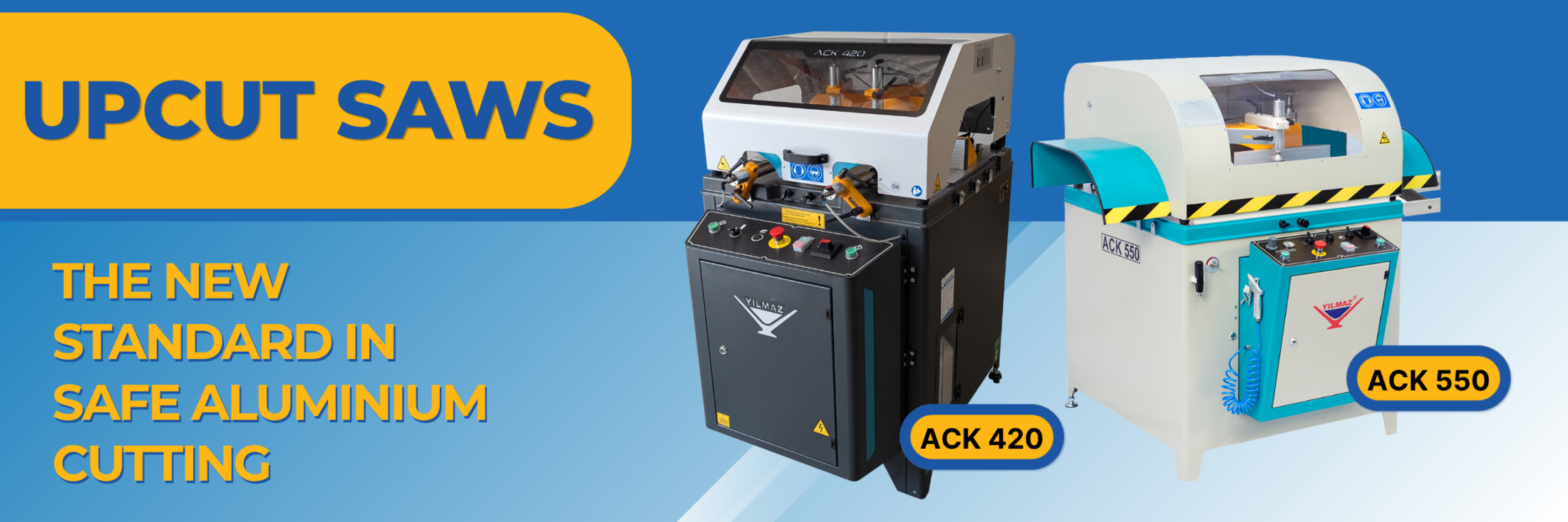
The Yilmaz ACK420 Aluminium Upcut Mitre Saw is designed for commercial aluminium and general profile cutting. It includes a 420 mm blade, four regulated pneumatic clamps, controlled blade feed and spray-mist lubrication.
For workshops processing larger profiles, the Yilmaz ACK550 Aluminium Upcut Mitre Saw provides a larger-capacity option with a 550 mm blade, pneumatic clamping, hydro-pneumatic blade feed and a pneumatic safety hood.
The right machine will depend on your profile dimensions, production requirements, available space and how you want to scale your business.
Is Upcut Technology Right for Your Workshop?
Switching to an upcut saw is about more than changing the direction of the blade. It creates a more controlled process for securing the profile, managing blade movement, setting angles and handling swarf.
For workshops looking to advance production, upcut technology can support safer operation, more consistent output and a steadier workflow as demand grows.
AMS can help you compare the ACK420 and ACK550 and identify the most suitable setup for your workshop.
Contact the AMS team today to discuss your cutting requirements or request a free demonstration.